

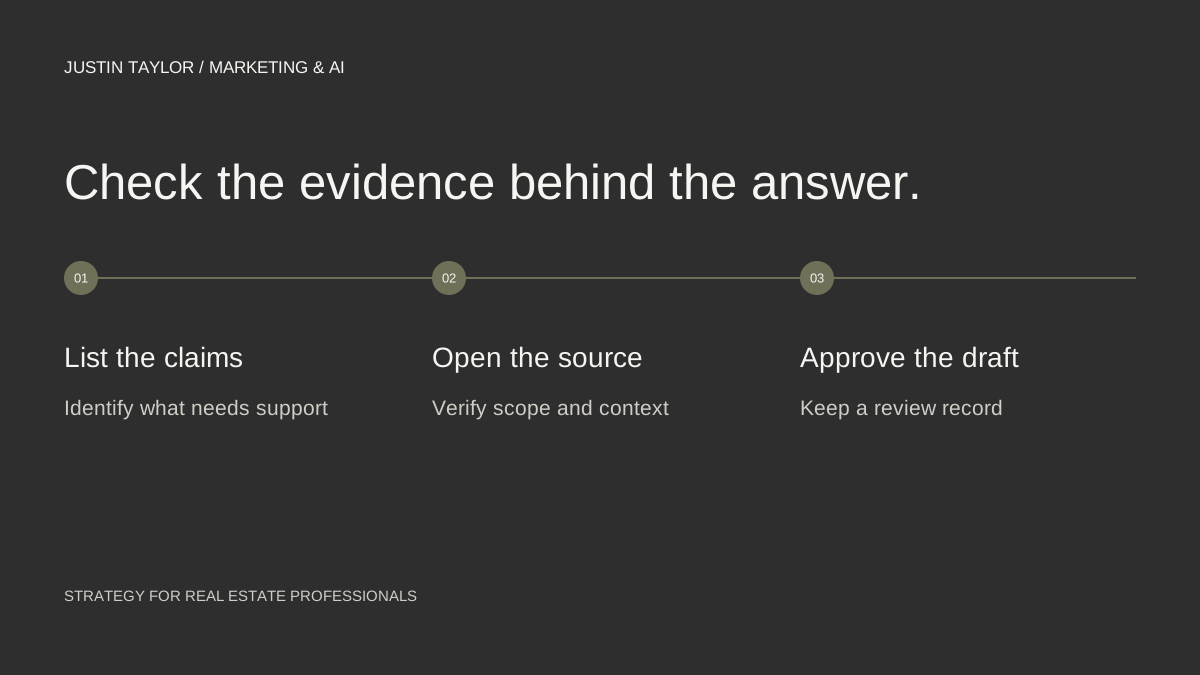
An AI-generated paragraph can sound finished before its facts are ready. In real estate marketing, the vulnerable details are often ordinary ones: the date of a report, the area a statistic covers, a business affiliation or a claim about a property feature.
A repeatable review process separates the writing from the evidence. The goal is to publish an answer you can explain and support, with a record of where changing information came from. The workflow below is an editorial method for agents and marketing teams, not a substitute for professional review where a subject requires it.
Start with approved material
Before drafting, create a short source packet. Include your own notes, the relevant primary documents and the date you checked them. Keep excerpts focused on what you need and respect the source’s reuse terms. If you are explaining a platform feature, start with that platform’s help documentation.
For a market update, identify the original report, its geography, reporting period and definition of each measure. A median and an average answer different questions. A figure for a whole county should not be described as a fact about a particular subdivision.
Give the tool those boundaries. Ask it to leave gaps visible instead of filling them with plausible details. The prompt templates for agents include instructions for doing that.
Pull the factual claims into a review list
Read the draft once for claims rather than style. Highlight dates, quantities, comparisons, product instructions, named credentials and statements that begin with words such as “always” or “guaranteed.” A polished opening should receive the same scrutiny as a statistics section.
| Draft claim | What to verify | Decision |
|---|---|---|
| “Inventory rose this month.” | Original report, area, measure and comparison period. | Add the precise scope or remove the claim. |
| “Every account has this feature.” | Current platform documentation and eligibility notes. | State the documented availability. |
| “Our team helped hundreds of clients.” | An approved internal record supporting the number. | Use only a figure the business can substantiate. |
These are hypothetical editing examples. They are not current market findings or claims about Justin’s business. Keeping that distinction explicit prevents an illustration from accidentally becoming a published assertion.
Open the source behind each important claim
Follow the citation to the original page or document. Check that it exists, says what the draft claims and is current enough for the subject. A working link alone is not verification; the linked page might discuss a different population, period or product.
If the draft cites a report you cannot locate, remove the statistic until you can verify it. Asking the same AI system whether its claim is correct can be useful for finding questions to investigate, but it does not replace checking the source.
Semrush’s guide to AI-generated content discusses the need for human editing and fact-checking. In an agent’s workflow, assign that check to a named person rather than assuming the last person who opened the document completed it.
Check meaning after the facts
A sentence can use a correct number and still draw an unsupported conclusion. If a report describes a change over one month, do not let the draft turn it into a prediction about the next year. Separate an observation from your interpretation and make clear when a statement is an example.
Review quoted language against the original. Paraphrases should preserve meaning and identify the source. Avoid invented client stories, testimonials or first-person experience. If an example would help, create one and label it as hypothetical.
For real estate material, also route claims about contractual obligations, financing or legal requirements to the appropriate qualified reviewer. Keep private client details out of public examples and out of tools that have not been approved for that information.
Publish with a maintenance note
Keep a private record of the reviewer, source URLs, date checked and any information likely to change. A tutorial involving a platform menu needs another look when the interface changes. A time-sensitive market post needs a clearly stated reporting period.
Google’s generative AI guidance applies quality and accuracy expectations to page content and metadata. Check the title, description and image caption along with the body; an exaggerated headline can misrepresent an otherwise careful article.
Before publishing, ask a colleague to identify the main answer and the evidence supporting it. If either is hard to find, revise the article. Then connect it to the relevant topic hub so readers can find more context, including how AI search relates to an agent’s website.
Sources & further reading
Platform guidance and research referenced in this article. Reviewed September 27, 2026.

Growth & Strategy Manager at Inspire Title Team | WFG Title. Marketing and AI guidance for real estate professionals.