
To find out whether an AI workflow is worth using in your real estate marketing, test one recurring task for two weeks. Compare the time it takes to reach a usable result, including preparation, review and corrections. Keep the workflow only if it earns a place in your business through better work, less effort or both.
HubSpot’s current overview of generative AI in marketing, updated October 1, 2026, draws a useful distinction between adopting AI and using it well. Its emphasis on human judgment raises a practical question for agents: does the tool improve the work after someone has checked it?
The pilot below answers that question with your own evidence. It does not require a new subscription, a complicated automation or access to your client database.
Choose one task with a clear finish line
Start with a task you already do and can evaluate yourself. “Improve my marketing” is too broad. “Turn this week’s recurring buyer questions into a one-page content brief” has a recognizable input and output.
For this example, an agent keeps general notes about questions that come up during conversations: how to organize a home-search visit, what to prepare before meeting a lender, or what happens during a showing. The agent removes identifying details and selects material that is appropriate to use in an approved AI tool.
The finished brief should contain one audience question, a proposed article angle, three points to cover, the original note supporting each point and any unanswered questions. It is a planning document for the agent or writer to review.
A team leader could run the same exercise with agent-training questions. A lender could use general questions about preparing for an introductory appointment, with the relevant internal review. Keep confidential transaction details, individual financial information and private client correspondence out of this pilot.
Define what “usable” means before you start
Write your acceptance criteria before looking at an AI-generated result. Otherwise, a polished paragraph can quietly lower the standard you intended to apply.
- Relevant: the brief answers a question the intended audience actually asked.
- Traceable: each proposed point connects to a supplied note or is marked as something to research.
- Specific: it gives the writer enough direction to produce a useful explanation.
- Accurate: it adds no invented market numbers, credentials, client stories or promises.
- Ready for the next step: the reviewer can assign or write the piece without rebuilding the brief.
For example, “write about buying a home” is too vague. “Explain how a buyer visiting Phoenix for two days can prepare a realistic showing itinerary” gives the writer a defined reader and problem. Any proposed claims about travel times, availability or market conditions still need evidence.
Choose one person to apply these criteria throughout the test. Record substantial corrections separately from ordinary style edits; fixing an invented fact matters more than changing a headline.
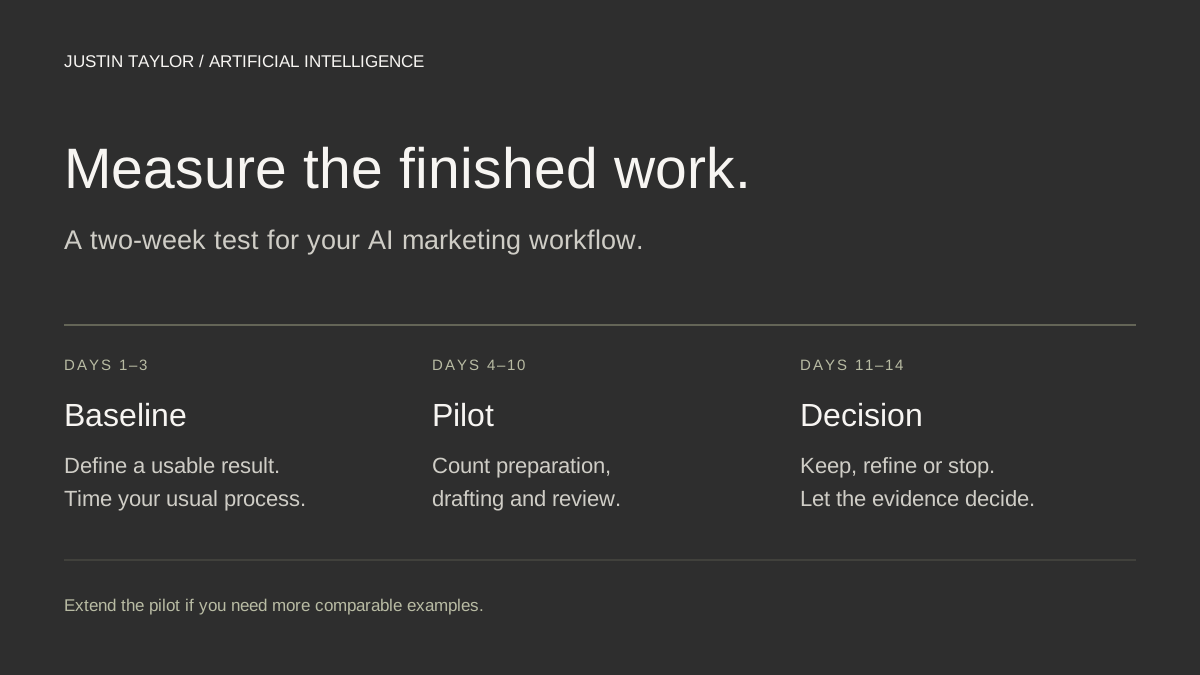
Days 1–3: measure your current process
Complete a few representative briefs using your usual method. Start timing when you begin gathering and organizing the notes. Stop when the brief meets the acceptance criteria. Include the checking and rewriting you normally do.
Use batches of similar size and difficulty. Comparing a short list of showing questions with a complicated market-analysis assignment would tell you little about the effect of AI.
If you only prepare one brief per week, extend the pilot until you have several comparable examples. Two weeks is a useful review date, not a minimum sample that guarantees a reliable conclusion. Historical notes can help you test more examples, provided they are still suitable and safe to use.
Days 4–10: run the AI version and log the whole job
Use one tool your organization permits for the material involved. Save the instructions, the input notes and the resulting brief. Keep the task and output format consistent. The existing guide to AI prompts for real estate marketing can help you specify audience, context and constraints.
Record which tool and model or mode you used, where available. Test several different batches. Avoid immediately repeating a brief you just completed manually: remembering your own answer can make the AI review artificially easy.
Semrush’s guide to building an AI SEO agent, published September 9, 2026, recommends testing with varied inputs and checking the evidence behind the output. Apply that principle here by including both straightforward notes and a batch with ambiguity or missing information.
A useful result should flag a gap. If your notes mention “buyers ask about closing costs” without supplying an explanation, the brief should request a qualified source rather than invent an estimate.
| Measure | What to record |
|---|---|
| Preparation | Minutes spent selecting, cleaning and arranging the input. |
| Drafting | Minutes spent prompting, waiting, retrying and organizing the result. |
| Review | Minutes spent checking evidence, correcting errors and editing. |
| Quality | Which acceptance criteria passed, which failed and why. |
| Outcome | Usable brief, brief needing revision or abandoned attempt. |
| Follow-through | Whether the brief was actually assigned or used. |
Keep abandoned attempts in the record. A workflow that creates one good brief after several discarded drafts carries all of that effort. Track interruptions and unattended waiting separately if you want to distinguish hands-on time from elapsed time. Use the same convention for both methods.
Compare total effort, not the fastest draft
Consider this hypothetical example. These figures illustrate the calculation; they are not measured results or expected savings.
| Stage | Usual method | AI-assisted method |
|---|---|---|
| Preparation | 8 minutes | 12 minutes |
| Drafting | 25 minutes | 5 minutes |
| Review and corrections | 11 minutes | 20 minutes |
| Total | 44 minutes | 37 minutes |
The draft arrived 20 minutes faster, but the finished brief saved seven minutes. If setting up the workflow took 70 minutes, it would take ten comparable uses at that saving to recover the setup time. That calculation assumes the saving continues; record the actual results before relying on it.
Keep setup time separate from recurring effort, and note any additional tool cost. Compare typical results across your trials, including the range. One unusually fast run should not outweigh repeated corrections or unused briefs.
Days 11–14: keep it, refine it or stop
Review the completed scorecards against your original standard. Choose the next action based on the work you received.
- Keep: the briefs consistently meet your criteria and the benefit justifies the recurring effort and cost.
- Refine: a specific weakness is fixable. For example, add an instruction to preserve unanswered questions, then test fresh notes.
- Stop: rebuilding the output takes more effort than doing the task yourself, or important errors keep recurring.
Change one significant part at a time when refining. Save the new instruction version so you can see whether it helped. If you keep the workflow, document its inputs, expected output, reviewer and common failure points. Check it again when the tool or the task changes.
Connect the pilot to useful work
A faster brief has value when it helps you create something worth sharing. Check whether it becomes an article, a video outline or a resource your team uses. Repeatedly generating unused ideas is a signal to revisit the task.
This pilot evaluates production effort and usefulness. Two weeks cannot establish that AI caused more leads, higher rankings or better revenue. Those outcomes need separate measurement over a suitable period, with other changes considered.
Before publishing anything developed from a brief, use the real estate AI fact-checking process. If choosing the first workflow is the difficult part, Justin’s AI training for real estate professionals can help connect the technology to the work your business needs to get done.
Sources & further reading
Platform guidance and research referenced in this article. Reviewed October 6, 2026.

Growth & Strategy Manager at Inspire Title Team | WFG Title. Marketing and AI guidance for real estate professionals.