

An agent’s online information often lives in more places than the agent remembers: a brokerage biography, a business listing, an association directory, social profiles and old event pages. When the phone number or affiliation changes, some of those pages can keep showing the previous details.
A local citation audit is a review of those references. Semrush defines local citations as online mentions of business information such as name, address and phone number. For an agent, the useful first goal is straightforward: help people recognize the right professional and reach the right contact information.
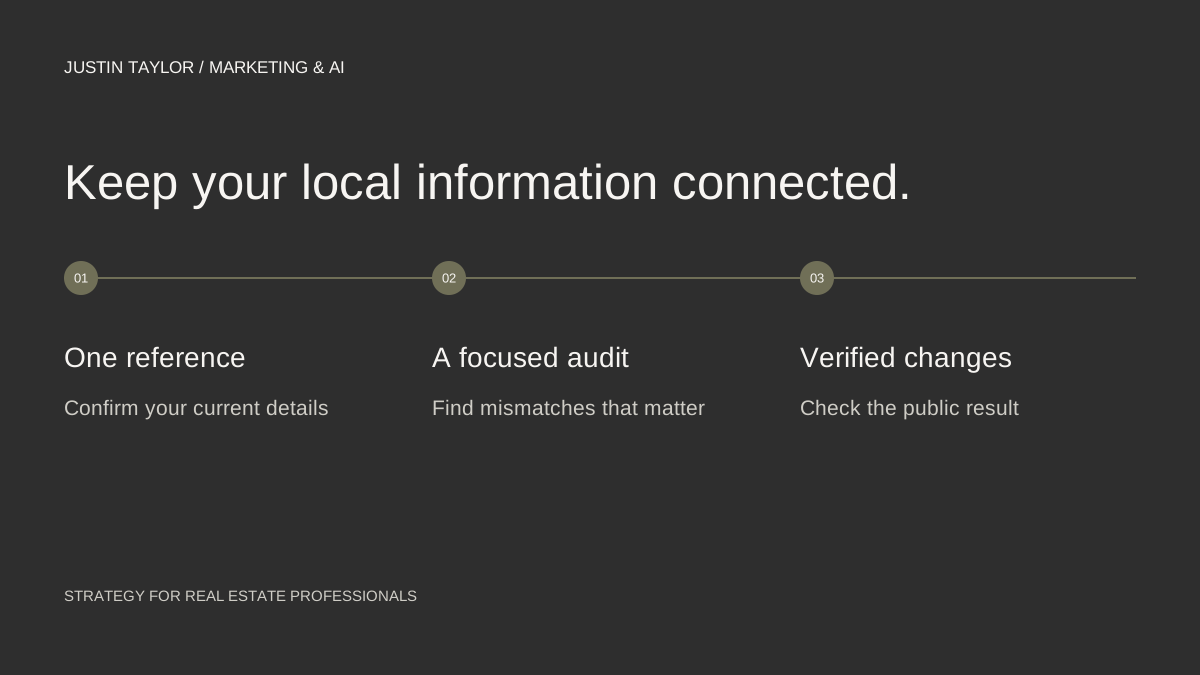
Create one reference record
Write down the current public business name, professional name, phone number, website, brokerage affiliation and social handles. Include the appropriate public address only where it should be shown. Do not publish a home address merely to fill a directory field.
Record where the information was confirmed and who can approve changes. An assistant should not have to guess which version of a team name is current or whether an old phone number still routes correctly.
Use Google’s business representation guidelines when reviewing the Google profile, including the rules relevant to individual practitioners and addresses. Accurate representation matters more than forcing every platform into an identical format.
Find the pages people can actually encounter
Search for your name with your city, your business name, your phone number in quotation marks and any former affiliation that may still appear online. Review the results as a prospective client would. Start with pages that rank for your name or appear prominently in your own client journey.
- Your website biography and contact page.
- Your current brokerage or team biography.
- Your Google Business Profile and other business listings you maintain.
- Public social profiles and video-channel descriptions.
- Relevant association, community and professional directories.
- Old event or article biographies that might be mistaken for current information.
The aim is not to enroll in every directory you can find. A relevant, accurate profile is easier to maintain than dozens of accounts nobody is responsible for checking.
Record the mismatch and its effect
| Field | What to record |
|---|---|
| Page URL | The exact page showing the information. |
| Issue | The outdated detail and the approved replacement. |
| Impact | Whether it misdirects contact, confuses identity or is a minor formatting difference. |
| Access | Who can edit it or which publisher to contact. |
| Status | Requested, changed, verified or awaiting a response. |
Prioritize a wrong phone number or an obsolete website over a harmless abbreviation. A contact route that fails can prevent an inquiry immediately. A stylistic difference in how a street name is written may not create the same problem.
Separate historical references from current profiles. An accurately dated article describing where you worked at the time does not necessarily need to be rewritten. A live biography presenting that old affiliation as current does need attention.
Correct the information, then verify the public page
Update pages you control first. For pages owned by a brokerage, association or publisher, send the exact URL and the specific correction requested. Keep the message focused so the recipient can make the change without reconstructing your professional history.
After an edit, check the public page while signed out. Follow the website link and test the contact route. An updated administrative screen does not necessarily prove that the public page has changed.
Do not create a duplicate profile to work around a forgotten login. Recover access or use the platform’s support process. Keep a record of who owns each account so the same problem is less likely to recur after a staff change.
Keep the record useful after the audit
Review the highest-priority profiles whenever your contact information or affiliation changes. Set a manageable routine for the rest. The audit sheet should show the last verified date and the next person responsible for checking it.
Pair this work with the Google Business Profile audit and a consistent review-request process. Together they help people find accurate information and understand the experience of working with you. Cleaning up listings supports that clarity; it does not guarantee a specific search position.
Sources & further reading
Platform guidance and research referenced in this article. Reviewed September 27, 2026.

Growth & Strategy Manager at Inspire Title Team | WFG Title. Marketing and AI guidance for real estate professionals.