
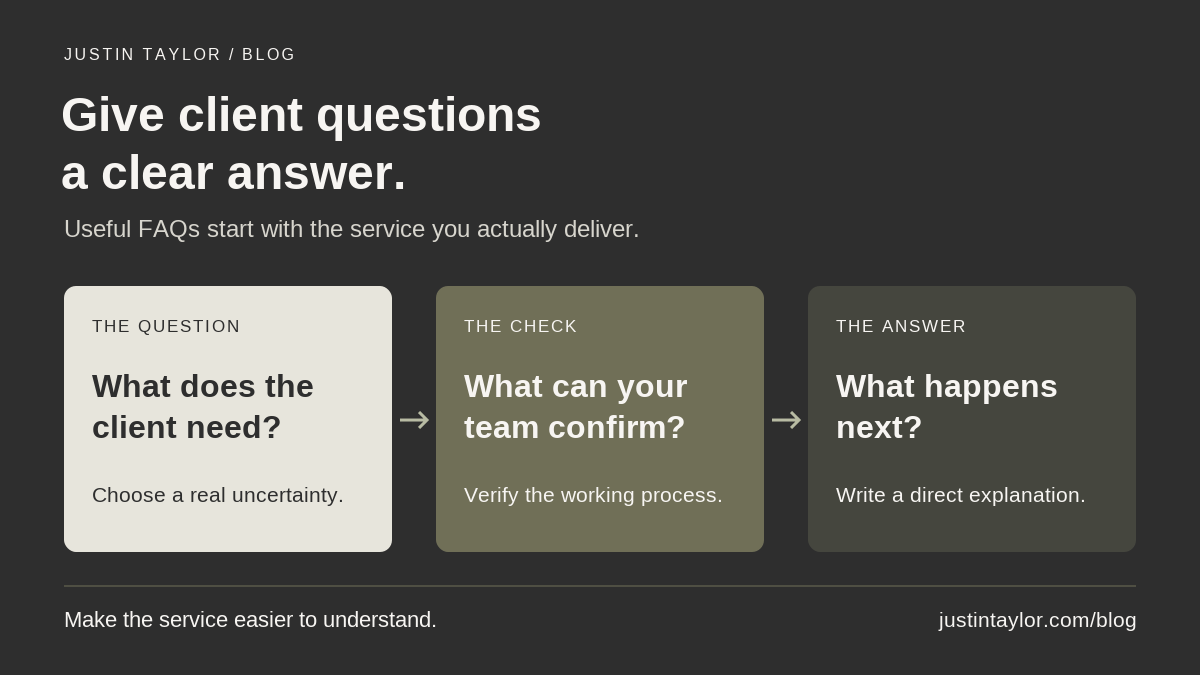
A useful real estate FAQ answers the questions someone needs resolved before taking the next step. Start with three to five questions on one service page, verify each answer against your actual process, and link to a longer guide only when the reader needs more detail.
For a seller considering a first conversation, that might mean explaining what the meeting covers, what to prepare and how communication works. Those answers should describe a service the team can deliver. A paragraph about being passionate, experienced and client-focused does not tell the homeowner what will happen.
Semrush’s pillar-page guide, updated November 13, 2026, describes an overview that connects readers to more detailed material. That organization principle is useful here: keep the immediate answer beside the service, then offer a relevant supporting resource. A service page does not need to become an encyclopedia to be helpful.
Choose questions that affect the next decision
Pick one page and one reader. For this exercise, imagine a fictional Mesa real estate team improving its seller-service page for homeowners exploring a possible move. The page already explains the service and offers a way to request a conversation.
Ask the people who handle inquiries to identify recurring points of confusion. Review the questions themselves without copying private client details into an editorial document. Group similar wording together: “What should I bring?” and “Do I need anything ready?” may need one answer.
Choose questions whose answers help someone prepare, understand the service or decide whether to contact the team. “Why are we the best?” is a sales claim disguised as a question. “What happens during the first seller conversation?” creates a clear job for the writer.
Your Search Console content review can provide additional clues about the language people use. Combine those clues with real inquiries and the page’s purpose; a search phrase alone does not establish what your team should promise.
Verify the process before writing the answer
Create a small working record before anyone polishes the copy. For each question, note the process fact, who can confirm it and what would trigger an update. This helps an editor distinguish a verified service detail from an attractive assumption.
| Question | Confirm internally | Review when |
|---|---|---|
| What happens in the first conversation? | The topics covered and who conducts it | The consultation process changes |
| What should I prepare? | What is useful beforehand and what can wait | The preparation checklist changes |
| How will I receive updates? | The contact person, communication channels and how expectations are agreed | Staffing or communication practices change |
In the fictional team, a listing lead might confirm the first two answers while an operations lead confirms the third. A solo agent can do the same review by checking the wording against their own working process.
If nobody can confirm a detail, leave it out until it is resolved. A response-time promise, meeting duration or included service becomes a customer expectation once published. The writing should follow the operation.
Write the answer first, then add useful detail
Use the first sentence to answer the question. Follow with the specific detail that helps the reader act. Keep any condition close to the statement it qualifies. Three clear sentences often do more work than a long introduction.
The examples below are original, hypothetical copy for the Mesa team. They are not statements about Justin’s services or a universal real estate process. Use this structure only after confirming your own details.
What happens during our first seller conversation?
We begin with your reasons for considering a move, your preferred timing and your questions about preparing the home. We explain how our listing service works and identify information needed for a more detailed discussion. You can bring questions even if you have not chosen a target listing date.
This describes the conversation without claiming that a particular recommendation or outcome is guaranteed. If the team uses a different sequence, change the answer to match.
What should I prepare before we talk?
A short list of your priorities, timing questions and known home updates is a useful starting point. If you have photos or notes you want to discuss, keep them handy. We will explain any additional preparation when we arrange the meeting.
The answer gives the reader something manageable to do. A detailed room-by-room checklist can sit in a supporting guide; it does not all belong in this response.
How will I receive updates while we work together?
At the start, we agree on your main contact and preferred communication channel. We also discuss how routine updates and time-sensitive questions will be handled. If another team member will help with a particular task, we explain that person’s role.
Notice the level of specificity: the sample describes how expectations are established without inventing a daily call schedule. If a team does have a consistent, confirmed schedule, the answer can say so.
Place each answer where the question arises
Put a small FAQ section near the relevant service description and next step. A seller should not have to leave the seller page, browse an unrelated question library and reconstruct the answer.
Some questions belong in the main copy instead. If nearly everyone needs to know what the service includes, explain that in the service section. Use the FAQ for useful follow-up detail. A question that requires a substantial comparison, checklist or worked example may deserve a separate guide.
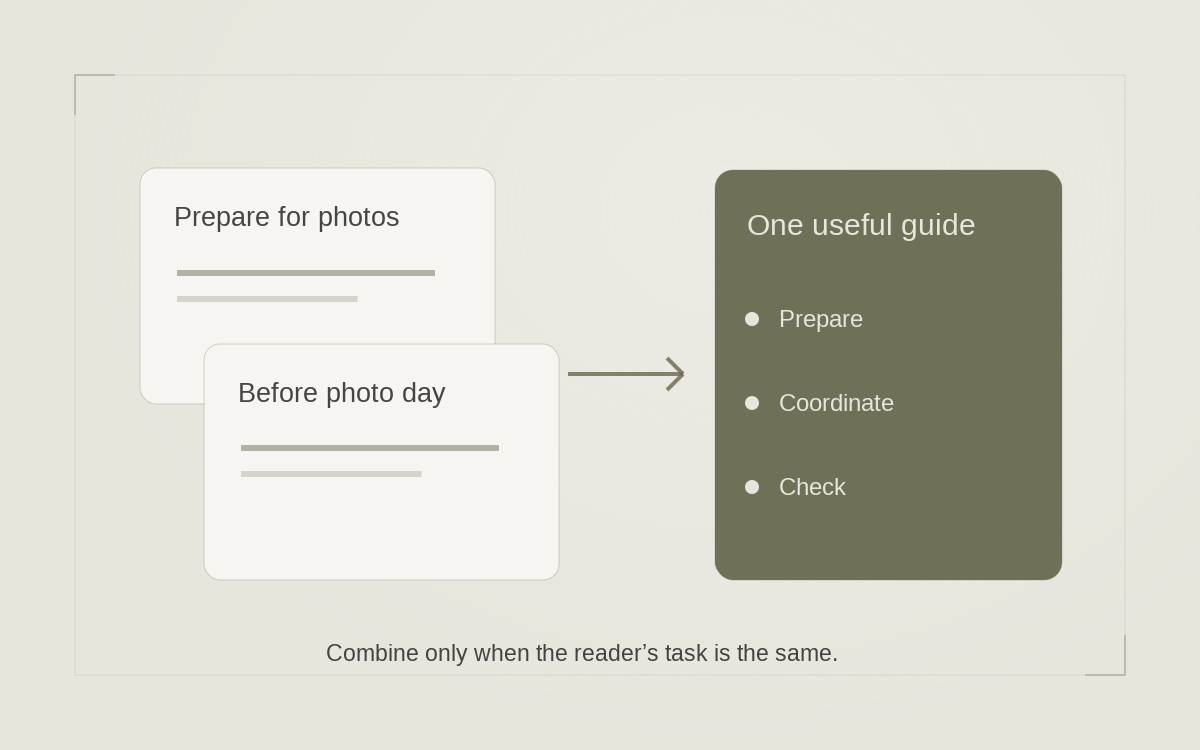
This is an application of matching a page to the reader’s task. The service page helps someone understand working with you; a supporting article helps them explore a subject more deeply. Your content cluster can connect the two without repeating the same long explanation everywhere.
When you add a link, name the destination clearly, such as “prepare for your first seller meeting.” Google’s link guidance recommends descriptive link text and ordinary links with an href destination. Ask your website provider to check that the link opens the intended page.
Make the answers easy to read and open
For three short answers, visible question headings and paragraphs are a straightforward option. If your design uses expandable accordions, check the interaction on a phone and with a keyboard.
The W3C accordion pattern specifies button controls within appropriate headings, an expanded-state indicator for assistive technology, and Enter or Space to open a collapsed answer. Tab should reach the controls and other interactive elements. Give this reference to your website provider rather than assuming a plus icon makes a component accessible.
Read the answers at normal phone size. Check that the question remains understandable when it wraps, links are easy to select and opening an answer does not cover the next action. Ask a colleague to find one answer without explaining where it is.
Set accurate expectations about search features
Google’s Search documentation changelog says FAQ rich results stopped appearing in Google Search on May 7, 2026. Adding FAQ markup is therefore not a route to that retired search display.
The practical reason to publish these answers is that clients need them. Clear copy and useful links improve the page you control; they do not guarantee indexing, rankings or inclusion in an AI answer. Keep the FAQ’s success criteria tied to the questions it resolves.
Publish a small set and keep it accurate
Before publishing, have the process owner approve the wording and the website editor check the layout and links. Keep the review date and owner in your internal record. Revisit the answers when the underlying process changes, and include them in your regular website review.
After publication, ask the people handling inquiries whether visitors still misunderstand the same points. Record the question they hear, then examine whether the answer is missing, hard to find or unclear. That observation is more useful than adding another FAQ solely to make the page longer.
Start with one service page this week: choose three questions, confirm the facts, write direct answers and test the complete reader experience. If the page needs a clearer connection between its service description, supporting guides and contact step, Justin’s SEO and search strategy support can help shape that work.
Sources & further reading
Platform guidance and research referenced in this article. Reviewed November 24, 2026.

Growth & Strategy Manager at Inspire Title Team | WFG Title. Marketing and AI guidance for real estate professionals.